CASE STUDY- RHINOFLEX SERIES PJ- AIR JACKETED PINCH VALVE
This is a case study, done on the successful outcome, at the Alexandrina Council, South Australia a few years ago using a Rhinoflex Series PJ, Jacketed pinch valve.
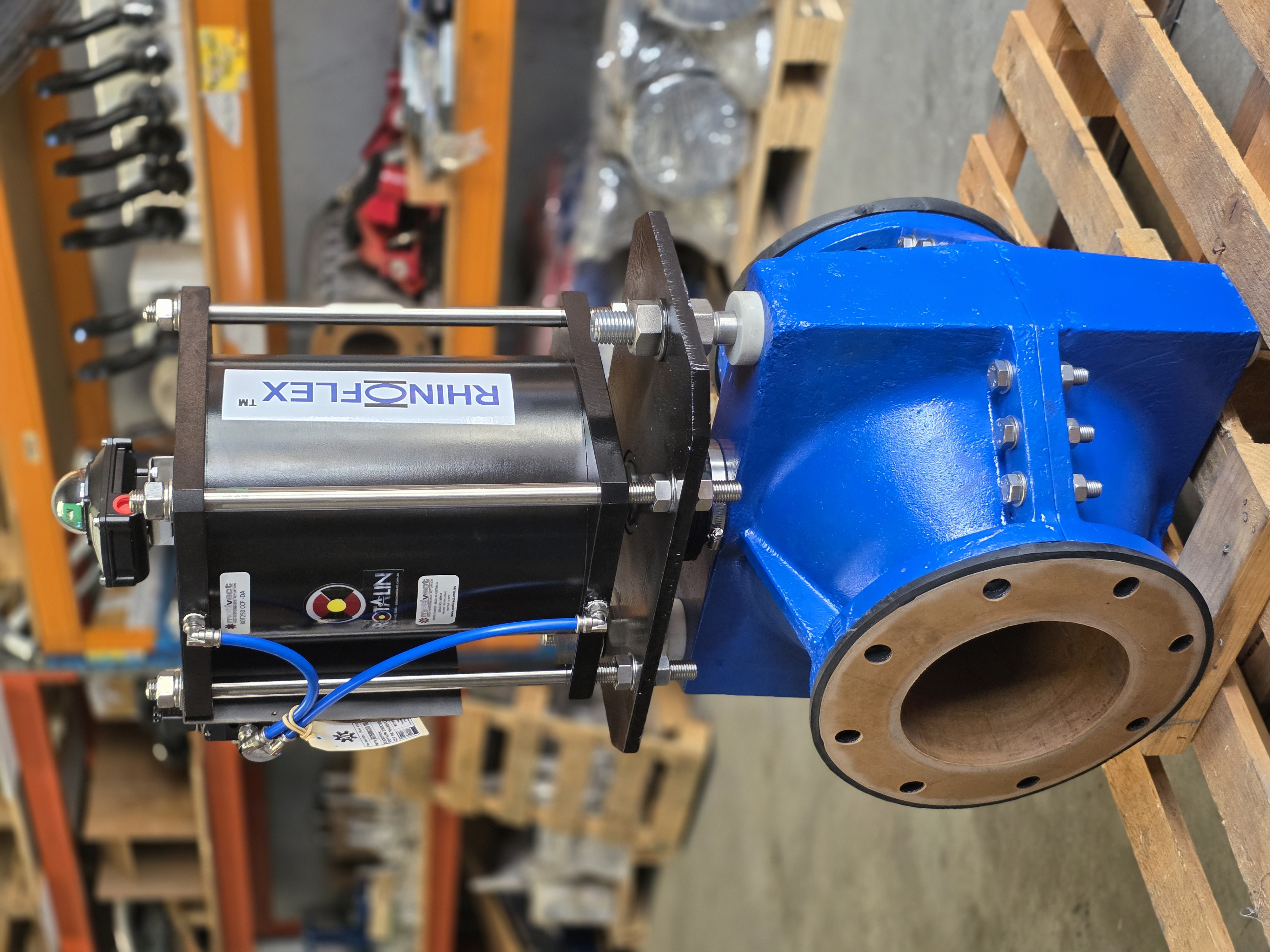
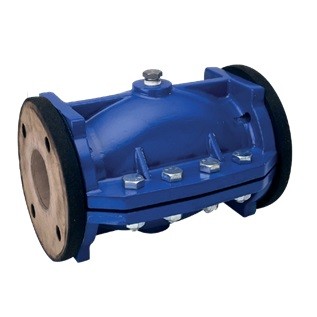
Briefly, the Series PJ pinch valve, is a very simple valve. It has a high-quality elastomeric sleeve, fully encased in a Ductile Iron housing unit, (like a dome shaped unit), and flanged AIRTIGHT. The body has an AIR INLET on the top, and a SUMP PLUG below the housing body. Pressure gauge and filter regulator are hooked up to the top half.
All this valve needs to operate, is the differential pressure of 2 bar to open and close this valve. They can be used for ON-OFF ISOLATION DUTY or even MODULATING, CONTROL.
Now, the Alexandrina Council in South Australia, had a very precarious situation.
They had a very remote community village, and the layout was such that the sewage from the village had to be pumped for about 3 kms to the sewage plant. Being very isolated and remote, Pneumatic Pressure, Electrical or Manual operator options also proved to be challenging.
Rhinoflex was consulted, and we came up with the decision to use a Series PJ, with its OWN DEDICATED AIR TANK. This formed one complete unit and was calculated such that the air capacity would be larger than required, and allow for a minimum of 2 Bar, to keep the valve closed.
It was a 200mm (8 inch) valve, so the air tank was also considerable in size and volume.
The whole piping and valve rig was fitted out, from the start point of the PUMP HOUSE, with piping travelling all the way to the plant. Pressure relief valves and flow meters were installed along the section at intervals.
So, the method here is, once it is all set up, induce air pressure into the valve so that the valve is closed. This amount of air will remain inside the valve body, and the valve will remain closed.
On the other side, the pump starts to begin pumping the sewage. Reducing the pressure from the tank on the valve, let the valve slowly close by adjusting the pressure on the valve body. Now when the pump builds up pressure, it will continue to keep the pinch valve open. The extra air from within the valve is now directed back into the air tank.
Now when the pump stops pumping, the pressure in the line will drop, thereby closing the valve automatically, back into its original position before pumping.
The field crews on both ends were in joy and were pleased over the walkie talkies to each other.
The ability to operate this pinch valve with its own dedicated air tank was a real godsent to the council, and they could sleep easily knowing that this system will work 24/7 without any electricity or air compressors at site. Once in 3 months, the dedicated air tank will be needed to be propped up with compressed air, so that the levels ae always maintained.